 Aller au contenu
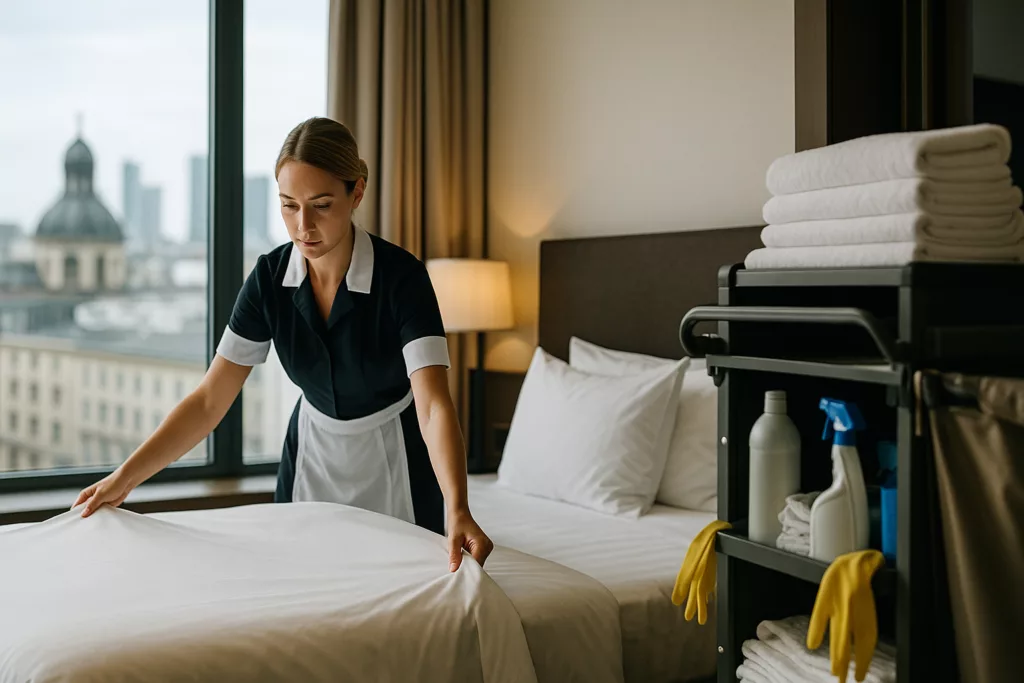
Housekeeping workforce shortages across Europe in 2026
Housekeeping workforce shortages across Europe in 2026 are reshaping hotel operations and margins. Demand has normalised, but vacancies, churn and housing costs still constrain capacity. This brief maps causes by market reality and offers a pragmatic playbook to stabilise teams—locally and through cross‑border hiring—without sacrificing quality or compliance.
What’s driving housekeeping workforce shortages in 2026
Across Western Europe, operators report persistent gaps in housekeeping headcount despite resilient demand and rising guest expectations. The pressure points are consistent, but their intensity varies by city, season and asset class.
- Demand and seasonality: City‑break and events demand remains strong, while coastal and alpine peaks compress staffing into tight windows. Short booking curves make scheduling harder.
- Demographics and competition: Ageing workforces and tighter local labour pools collide with competition from logistics, cleaning, healthcare and facilities roles that may offer steadier hours.
- Pay and cost of living: Wage floors have risen in many markets, yet housing and transport costs outpace entry wages, reducing the effective take‑home benefit of hotel roles.
- Housing proximity: Affordable accommodation near city‑centre hotels is scarce, extending commutes and limiting late/early shift coverage.
- Migration and permits: Reliance on mobile EU talent continues, while non‑EU routes can be slow or restricted. Administrative delays and documentation gaps deter candidates.
- Job design and workload: Tight turnaround times, heavy trolleys, and variable room standards drive fatigue and churn if pacing and supervision are not calibrated.
- Technology adoption: Tools exist (workload algorithms, mobile checklists, linen tracking), but uneven deployment leaves productivity on the table.
Net effect: elongated time‑to‑clean, higher overtime, increased outsourcing on peak days, and pressure on guest satisfaction and GOPPAR.
How to stabilise and scale housekeeping teams (including cross‑border)
The goal is predictable capacity at a competitive unit cost, with compliance built in. Prioritise the following levers and track outcomes weekly.
- Forecasting and scheduling: Lock weekly room‑attendant rosters on a rolling 2–3 week horizon; reserve a 10–15% flexible bench for events and flights. Use historical stay patterns and PMS integrations to stage workload.
- Clear pay bands and benefits: Typical gross hourly ranges in Western European urban markets are often around €12–€16 for room attendants (non‑official, indicative only; validate locally). Add meal vouchers, transport passes or laundry allowances to improve effective pay.
- Housing and transport support: Negotiate blocks with residence providers, offer shared flats with transparent rules, or provide commuter shuttles for early/late shifts. Small investments here materially widen the candidate pool.
- International and seasonal hiring: Build pipelines from EU talent hubs (e.g., Southern and Eastern Europe) for shoulder and peak seasons. For short postings, align with social security rules (A1 certificates) and host‑country wage floors. For non‑EU nationals, pre‑screen partners for legal eligibility and timelines.
- Speed‑to‑productivity: Standard operating procedures with visual checklists, zone cleaning, and buddy systems reduce errors. Experienced hires commonly reach baseline pace in ~2–4 days; newcomers often require ~10–14 days (indicative, non‑official ranges).
- Quality control: Daily micro‑audits (5–10 rooms per supervisor) with immediate feedback sustain standards without slowing the line. Track re‑clean rate and defect types.
- Retention mechanics: Target the first 90 days: predictable rosters, humane pacing on days 1–10, and swift issue resolution. Referral bonuses payable at 30/90 days generally outperform once‑off sign‑on incentives.
- Technology as an enabler: Deploy mobile tasking, dynamic workload balancing, and linen/amenity scanning. Robotic vacuums can offload corridor/large‑area work; position them as tools, not headcount replacements.
- Compliance by design: Map roles to national classifications, respect working‑time and rest rules, and verify vendor chains. For cross‑border postings, ensure correct notifications and social‑security coverage before deployment.
Treat housekeeping as a repeatable operations discipline: calibrate inputs (hours, tools, training) against outputs (clean rooms on time, guest scores), and publish the scorecard weekly.
| Channel | Typical time‑to‑fill | Notes / cost |
|---|---|---|
| Local direct hiring (ads, walk‑ins) | 2–6 weeks | Media spend + HR time; strongest fit when housing is accessible. |
| Intra‑EU mobility (EU/EEA nationals) | 2–5 weeks | Travel + housing support; for temporary postings ensure A1 and host‑country compliance. |
| Specialist EU agency partners | 1–3 weeks | Fee‑based; vet worker status and pay parity; useful for ramp and openings. |
| Non‑EU sponsorship (where permitted) | 6–16 weeks | Document heavy; legal/admin costs; plan early and communicate timelines to ops. |
| Outsourced housekeeping vendors | 1–4 weeks | Faster capacity; higher unit cost; manage SLAs and supervision closely. |
Which European markets are most constrained in 2026?
What language level is typically required for housekeeping roles?
How long does international (non‑EU) hiring take?
Accelerate your hiring, without compromise
Describe your need, urgency and volumes.
We will respond with a clear, actionable plan.